Uzbekistan's Cultural Diversity and Unity: A
Pillar of Spiritual Progress Uzbekistan, with
its rich tapestry of cultures, stands as a
beacon of diversity and unity, embodying the
fusion of various civilizations throughout
history. The nation's cultural landscape,
shaped by centuries of interactions along the
Great Silk Road, serves as a testament to the
interinfluence of national cultures, fostering
spiritual progress and societal harmony.
Historical
Legacy: Situated at the crossroads of
the Silk Road, Uzbekistan has been a
melting
pot of diverse cultures, where ideas, traditions, and knowledge converged.
Tolerance
and Unity: Uzbekistan's multicultural
heritage is underscored by its commitment
to tolerance and unity, ingrained in the fabric of society since ancient times.
Interethnic Harmony: The harmonious coexistence of
diverse ethnicities within Uzbekistan
exemplifies the nation's dedication to fostering unity amidst diversity.
Cultural
Renaissance: The revival of spiritual
values and cultural traditions is
enshrined in
Uzbekistan's state policies, promoting the preservation and development of national
languages, arts, and customs.
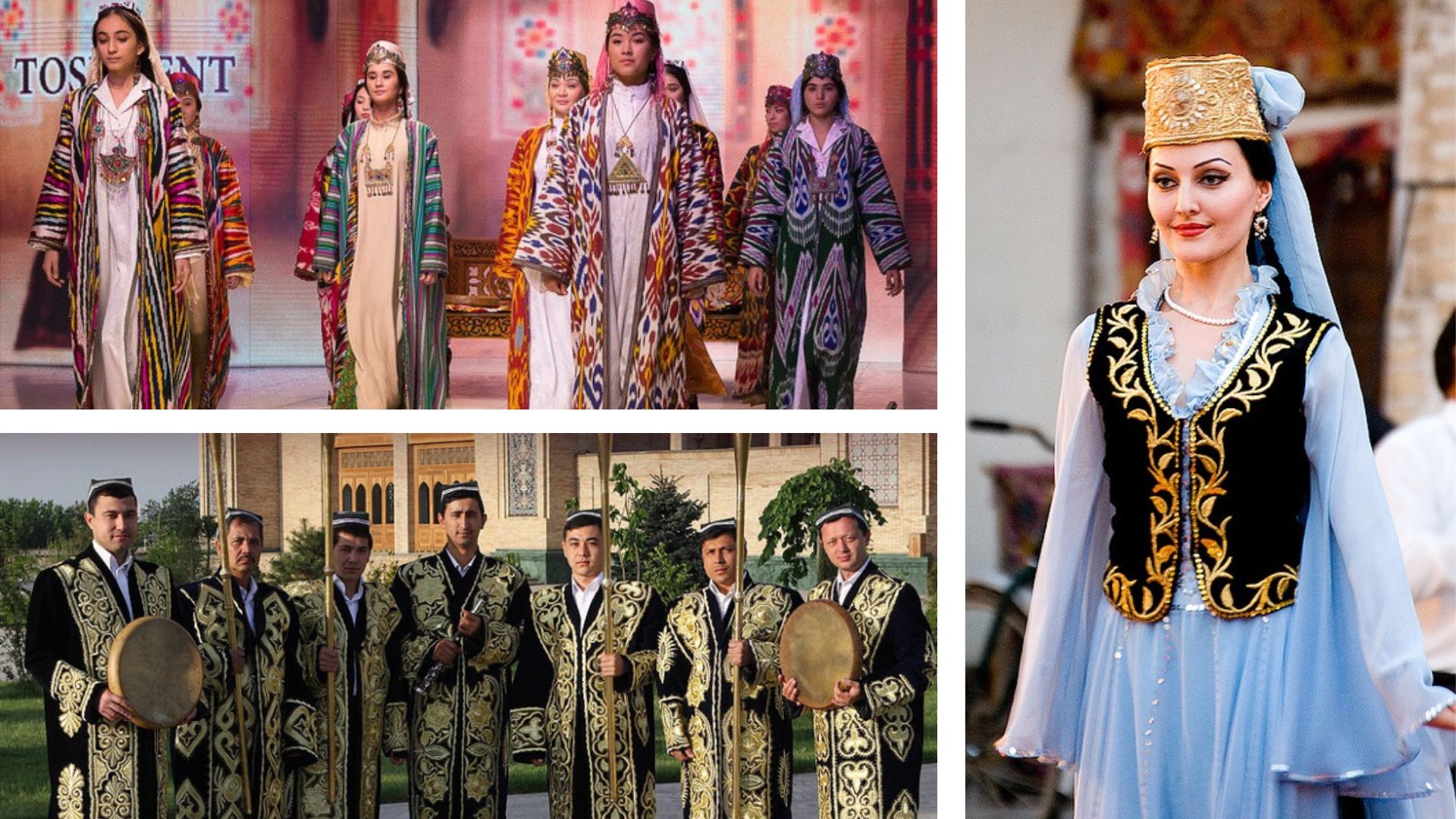
Uzbekistan Clothing
Men's
Attire: The quintessential Uzbek men's
ensemble
centres around the "chapan," a quilted robe tied with a
kerchief, paired with wide trousers known as "ishton." The
traditional cap, or "tubeteika," adds a distinctive touch to
the attire. Shirts, often adorned with intricate braiding,
complete the look, with gala outfits featuring elaborate
belts and sashes crafted from velvet or embroidered
fabric.
Women's Apparel: Uzbek women's attire typically comprises a
khan-atlas tunic-dress paired with wide trousers, with holiday
garments boasting luxurious satin fabric adorned with golden
embroidery. The headdress, consisting of a skull-cap, kerchief, and
turban, adds elegance to the ensemble. Gold and silver jewellery,
including earrings, bracelets, and necklaces, complement the attire,
reflecting the wearer's social status and regional influences
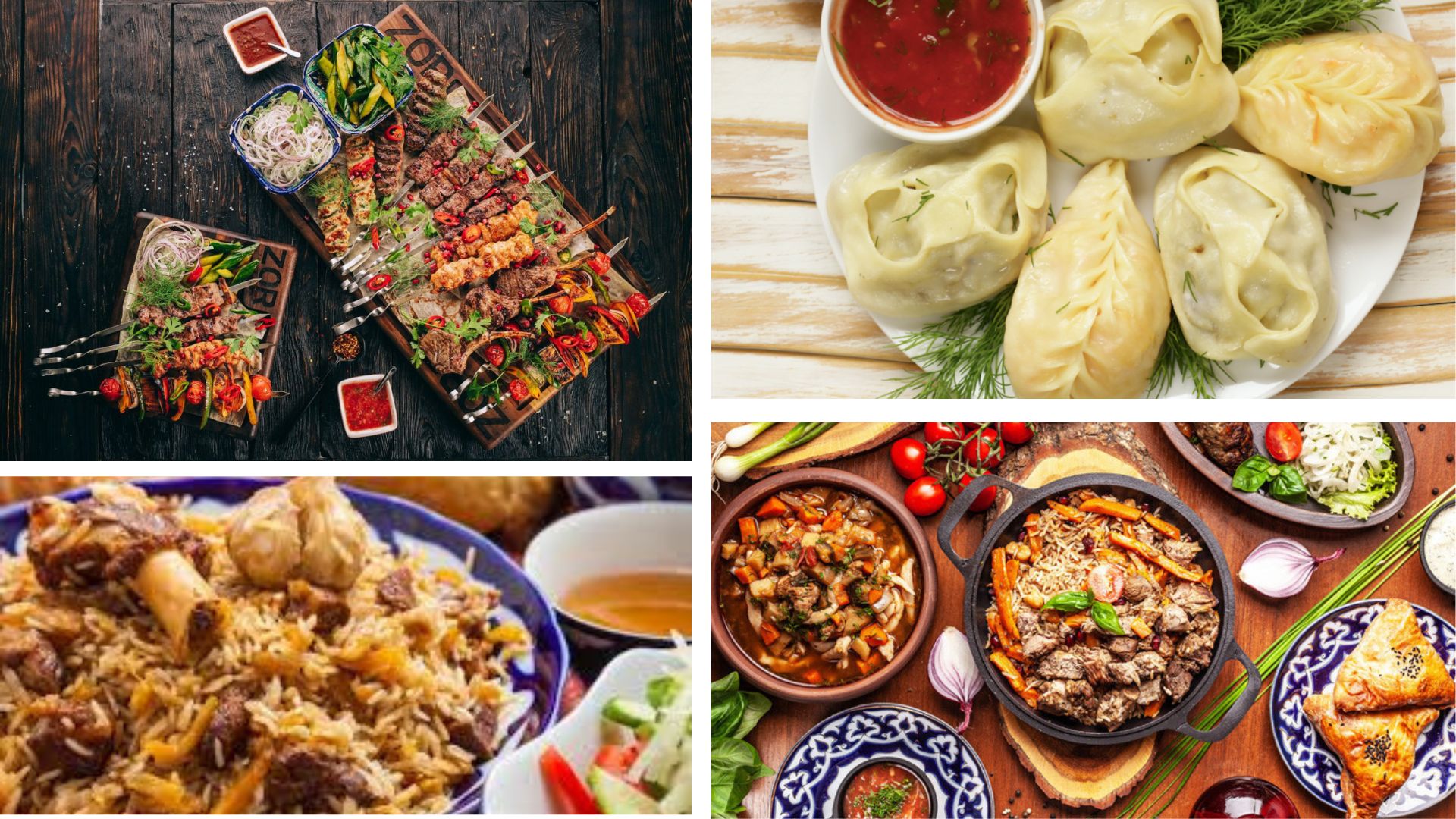
Uzbekistan Food
Plov :
Without a doubt, topping any list of traditional Uzbek
dishes to try is plov. So tasty is Uzbek plov (pilaf) that it is
included in the UNESCO Intangible Cultural Heritage List.
Shashlik
:
In Central Asian countries, including Uzbekistan, shish
kebab is called shashlik. In Uzbekistan the word ‘kebab’
is usually associated with a separate dish called Kazan-
kabob, which has nothing to do with barbecue.
Manty
:
Uzbek dough dishes are very diverse, yet a steamed
meat dumpling called manty (manti) is a favourite of
many. With its delicate dough and juicy filling, manty
is filling and satisfying.
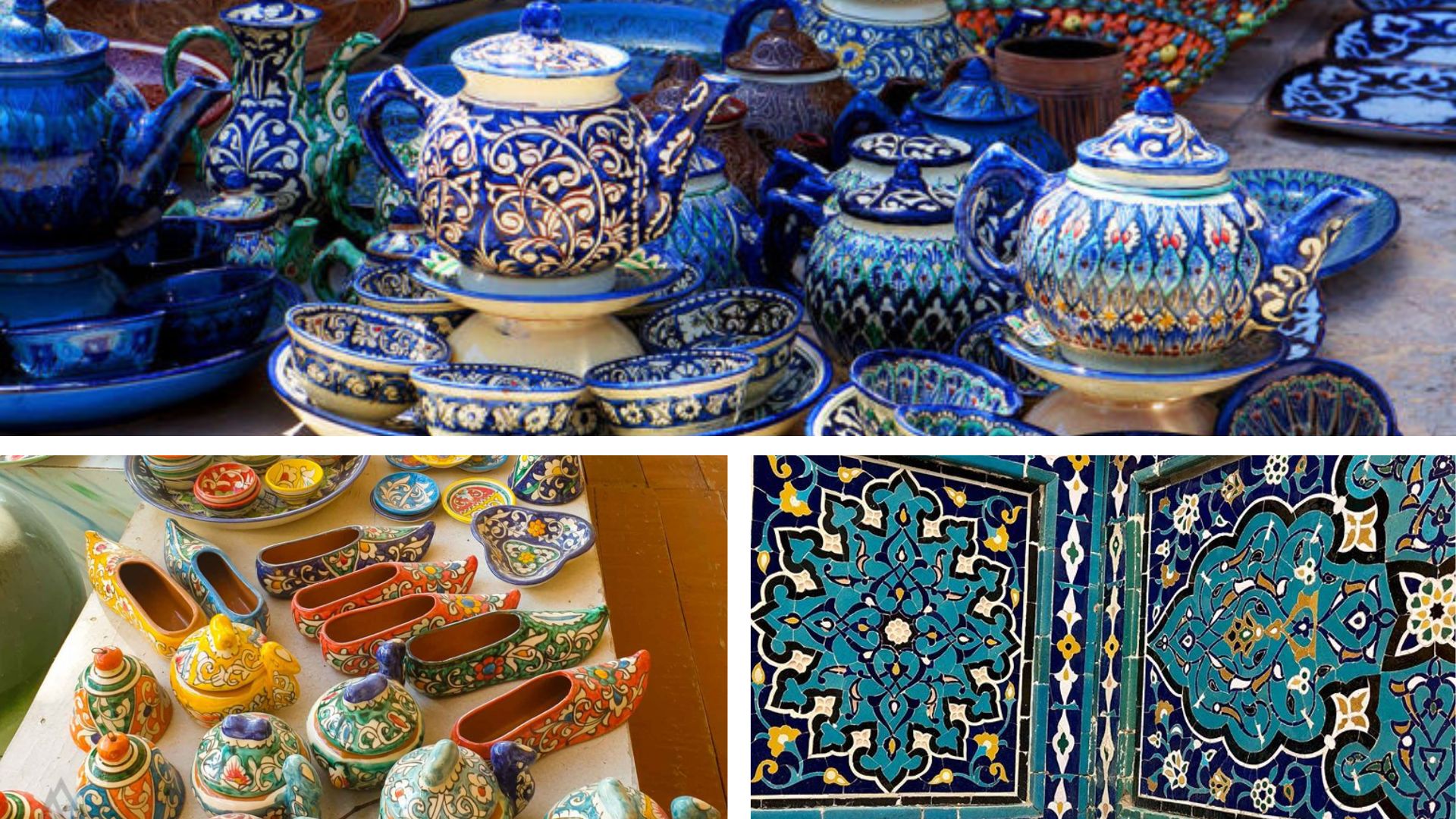
Uzbekistan Art
The art of Uzbekistan boasts a rich and
ancient history dating back centuries,
reflecting the diverse cultural tapestry of
the region. From primitive rock paintings
in Zarautsay to the sophisticated
terracotta figurines of Jarkutan, the
artistic heritage of Uzbekistan spans
multiple epochs and influences. During
antiquity, architecture, sculpture, and painting flourished, showcasing themes influenced by
Hellenistic and Indo-Buddhist art. The region's religious diversity, including Zoroastrianism
and Buddhism, also left a profound mark on its artistic expression.
While the art of Uzbekistan has gained recognition on the international stage, challenges such
as the preservation of museum collections and the support of contemporary artists remain.
Nevertheless, the enduring spirit of creativity and innovation continues to define Uzbekistan's
artistic landscape, ensuring its place in the global artistic discourse.

Uzbekistan Film Industry
The Uzbekistan film industry has witnessed a remarkable surge in both production volume and global recognition, as reported by the Uzbekistan Cinematography Agency. In 2023 alone, the agency oversaw the creation of 113 film projects, marking a staggering 300% increase compared to 2017. This impressive growth reflects the country's commitment to nurturing its cinematic talents and promoting its cultural heritage on the international stage. A notable highlight of the year was the collaboration with Turkish, Russian, American, and Italian partners to produce films showcasing Uzbekistan's tourism potential. These projects not only serve as promotional tools but also highlight the country's rich history and cultural diversity. Furthermore, partnerships with various ministries and agencies have led to the development of films focusing on historical heroes, adding depth and resonance to Uzbekistan's storytelling.
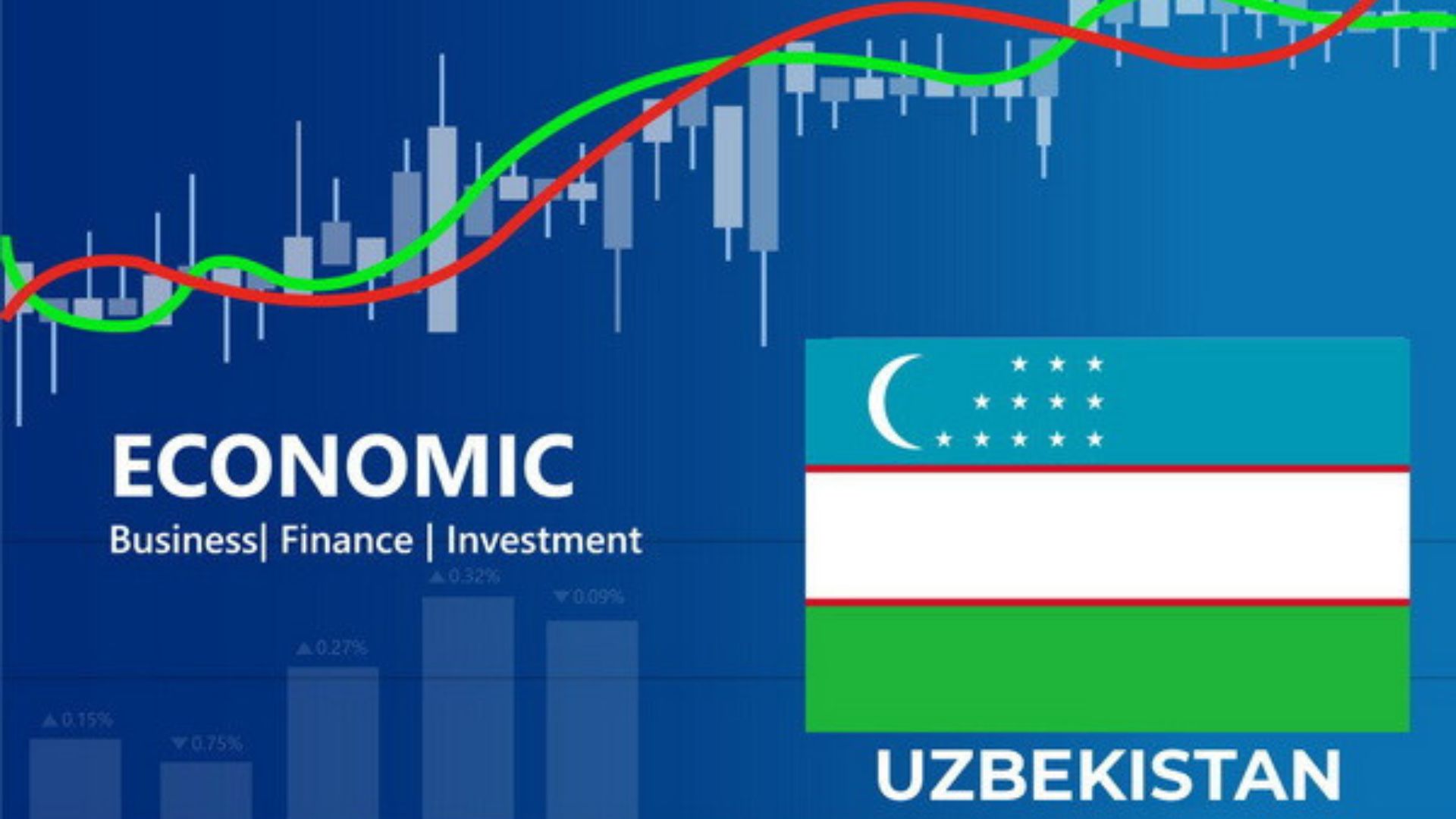
Uzbekistan Economy
Uzbekistan Economy
As of 2022, Uzbekistan's population stands at approximately 35.6 million people, with a gross
domestic product (GDP) of $80.4 billion and a GDP per capita of $2,255.6. The country's life
expectancy at birth is 70.9 years.
In September 2023, Uzbekistan's authorities
adopted the National Development Strategy (NDS)
until 2030, marking the third such strategy since
2017. The NDS aims to propel Uzbekistan towards
upper-middle-income status through sustainable
economic development, while also enhancing
education, healthcare, social protection systems,
and environmental sustainability to meet
international standards.
The strategy delineates 100 priority actions across
five key areas: promoting individual self-
fulfilment, ensuring welfare through sustainable economic growth, conserving water
resources, protecting the environment, and enhancing public administration focused on
citizens' needs